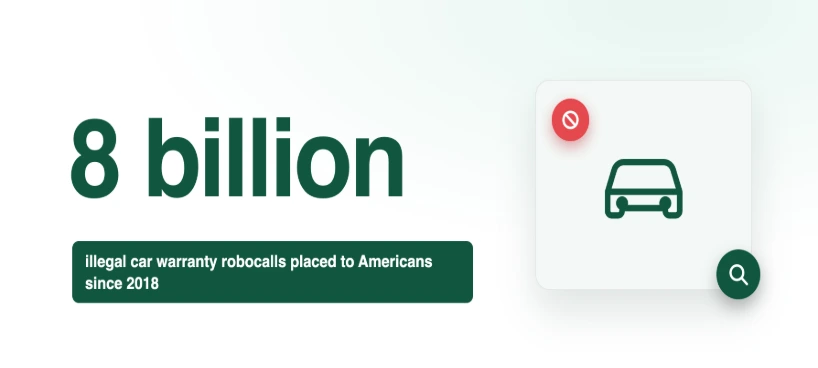
Car Warranty Scam Calls: How They Work and How to Stop Them
Getting car warranty scam calls? Here's how they work, what regulators have found, and the one question a scammer can never answer.
Scam Alert
Luke Belfield
Aug 19, 2026 • 8 min read

If you're trying to find someone on WhatsApp, you're probably dealing with one of two very different problems. Either you know exactly who they are and can't get WhatsApp's own search to cooperate, or you don't really know them at all, and a phone number is the only thing you have to go on. This guide covers both, starting with how WhatsApp's search works.
WhatsApp doesn't have a public directory or a search bar where you type in a name and see who comes up. This is because every WhatsApp account is tied to a phone number, rather than a username or a name, and the app only shows you contacts who are already saved in your phone's address book.
This means finding someone on WhatsApp almost always comes down to one of three things:
Saving their number to your contacts. Once a phone number is in your phone's address book and that number is registered on WhatsApp, the contact appears in your chat list automatically. There's no separate step inside the app.
Scanning a QR code. Every WhatsApp profile has a QR code under Settings that another user can scan to open a chat instantly, without either person typing in a number.
Following a click-to-chat link. A link formatted as wa.me/[phone number] opens a chat with that number directly, which is why businesses often share these instead of a saved contact.
WhatsApp doesn't offer a lookup feature, but a reverse phone lookup works independently of WhatsApp. It searches public records tied to the number itself, so it works whether or not the person has WhatsApp installed. This means a "WhatsApp number lookup" isn't really about WhatsApp's own systems, but about researching the number behind the account.
If someone gave you a phone number and asked you to move the conversation to WhatsApp, and you don't actually know much else about them, the app itself won't tell you who's on the other end. WhatsApp shows a profile photo and a status if the person has one set to public, and that's about it. There’s no name verification, no account history, and nothing else that would confirms someone’s identity.
The FBI has repeatedly flagged that scammers meeting victims on dating platforms will quickly move the conversation off the dating app or website to an encrypted platform, and WhatsApp is one of the most common destinations. WhatsApp isn’t inherently unsafe, but once a conversation leaves a dating platform, you’ll lose access to any of its built-in safety features.
A phone number gives you more to work with than most people realize.
A reverse phone lookup can surface the name potentially associated with a number, the line type, and general location history. A number registered as VoIP (Google Voice, TextNow, Burner, and similar services) is disproportionately common on numbers used specifically to avoid being traced back to a real identity. A VoIP result on a number someone gave you as their "personal" line is something to check further into.
If the WhatsApp profile has a visible photo, a reverse image search can show whether it appears elsewhere online under a different name. The FBI's romance-scam guidance specifically recommends this step, since scammers often reuse stolen photos and fabricated profiles. We cover this process in depth in How to Reverse Image Search a Catfish.
A VoIP number by itself could belong to someone who's simply privacy-conscious. A stock-looking profile photo by itself could be a coincidence. It's the combination of things like a VoIP number, a recently created account, a photo with no other public trace, and a story that doesn't quite add up that add up.
A few patterns show up often enough in verification cases that they're worth checking specifically, especially before a first date or before sending anyone money:
If several of these line up, it's worth reading How to Do a Background Check on Someone Before You Meet Them for a more complete verification process, or Romance Scammer Photos: Why Zero Results No Longer Mean the Photo Is Real if AI-generated images are part of what's giving you pause.
A reverse phone lookup or reverse image search can help you build context around a number or a photo. It can surface a name, a general location history, a line type, or other places a photo appears online. However, it can’t confirm someone's character, guarantee they're telling the truth about who they are, or replace a video call and your own judgment before you meet in person or send anyone anything of value.
A clean result also isn't a guarantee, just as limited public data on a number or photo doesn't automatically mean someone is lying. Due diligence here is about narrowing uncertainty, not eliminating it entirely.
Getting car warranty scam calls? Here's how they work, what regulators have found, and the one question a scammer can never answer.
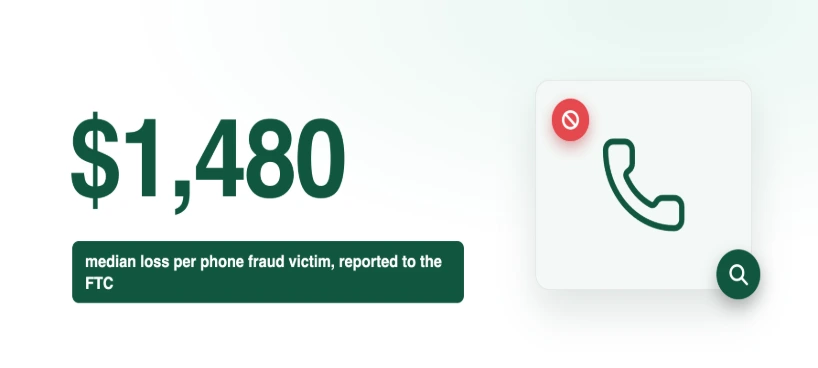
Private number calling you? Learn what the label means, when it's a red flag, and the safe way to find out who called.


Questions to ask when buying a used car regarding seller, title, and mechanical checks, plus a checklist table and VIN lookup to verify before you buy.