How to Identify a Fake Text Message (and Trace the Number)
Here's how to identify a fake text message in seconds, plus how to potentially find out who is behind the number.
Scam Alert
Claire Kellerman
Sep 8, 2026 • 7 min read

It's easy to assume the worst, when you see “Private Number” on your phone, but a blocked caller ID doesn't tell you who's calling or why.
Here's what "Private Number" means, who tends to call this way, and the one method that actually works if you want to find out who it was.
Your phone displays "Private Number" when the caller has deliberately blocked their caller ID information from being transmitted. It’s not the same as "Unknown Caller," which usually points to a technical routing issue rather than a deliberate choice.
Depending on your carrier and device, this same action can show up as "Private Number," "Restricted," "Blocked," or "No Caller ID." They all typically describe number suppression, which is done by dialing *67 before the number, or through a system-level setting on a business phone line.
Private number calls come from a wider range of sources than people expect:
You need context to separate a legitimate blocked call from a problem. Unsolicited robocalls, regardless of what number they show, are restricted under the Telephone Consumer Protection Act (TCPA), which is part of why illegal robocallers suppress their numbers in the first place.
Many companies route outbound calls through a shared phone system rather than individual employee lines. That system is often configured to suppress caller ID across the board, for every outgoing call, regardless of who's dialing or why. If you've done business with a company recently, a private-number callback from them isn't unusual on its own.
Scammers use number suppression for the same reason legitimate callers occasionally do, as it keeps the number off your radar. The difference tends to show up in what happens after you answer, not before.
Watch for these patterns rather than the private label itself:
The IRS, Social Security Administration, and most banks will not initiate contact this way as a first move, and none of them will demand an unusual payment method to resolve an account issue. If a private number call includes any of the above, that's your signal, not the caller ID label alone.
It's worth taking the steps necessary to check, just to be safe. Phone calls caused the highest average per-person loss of any contact method scammers used, according to the FTC. Here’s what you should do:
1. Let it go to voicemail. Legitimate callers, private number or not, almost always leave one. Silence or a generic recording is itself useful information.
2. Check for a callback number in the voicemail. Some private number calls leave a separate number to call back, even though the original number was suppressed on the incoming call.
3. Run that callback number through a reverse phone lookup. A reverse phone lookup can surface name associations, carrier type, and spam reports filed by other users on that number, which gives you real context before you decide whether to call back.
4. Don't call the original number back blind. If no callback number was left, calling into a suppressed line typically routes nowhere useful.
5. Report persistent or suspicious calls. The FTC and FCC both take reports on unwanted calls, including ones that arrive as spoofed, blocked, or mislabeled, and they use details like a callback number to help identify repeat offenders even when the original call can't be traced. Reports can be filed at reportfraud.ftc.gov or through the FCC's complaint center.
If the calls keep coming, layering on carrier-level spam filtering can cut down the volume significantly. See our full guide on how to stop spam calls for a step-by-step setup.
Don't confirm personal information to a caller who won't identify themselves first. Don't call back an unfamiliar number out of pure curiosity, especially if the original call was a single ring. Also, don't assume "Private Number" automatically means scam. Treating every suppressed call as hostile means missing calls from someone trying to reach you for a legitimate reason.
These three labels get used interchangeably, but they don't always mean the same thing. "Private Number" and "No Caller ID" both point to intentional suppression by the caller, while "Unknown Number" more often signals a technical or carrier-side routing issue rather than a deliberate choice. International or VOIP-routed calls add another wrinkle: they can display as blank, "Unknown," or "Private" even when no one intentionally hid anything, simply because the call passed through a network that doesn't pass caller ID data along.
If you want the fuller breakdown of every label and what each one usually means, see what "No Caller ID" means and who's calling or the complete field guide to unknown numbers and no caller ID, which classifies each type in more depth than fits here.
Not sure who's behind that last private call? Run any callback number you do have through ClarityCheck's reverse phone lookup to see what's publicly associated with it before you decide anything.
Here's how to identify a fake text message in seconds, plus how to potentially find out who is behind the number.
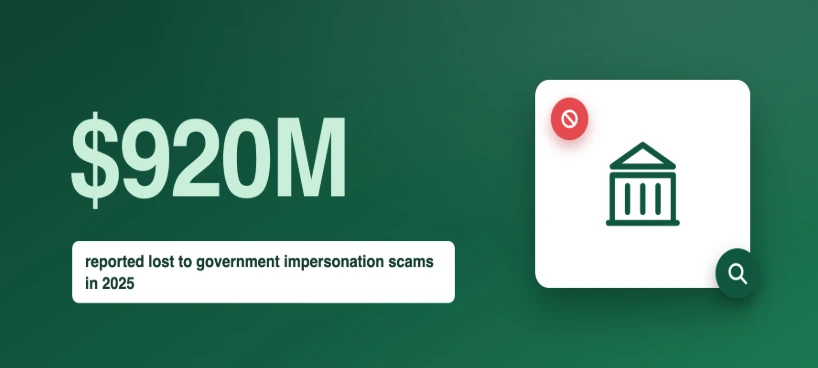
Got a call about back taxes? The IRS never calls first. Here's how the scam works, the fake agency names to know, and what to do next.
How to find someone on Discord with or without their username, what their profile still reveals, and how to check they're who they say before you trust them.