Car warranty calls have been hammering phones for years, and are one of the most reported robocall categories. Here's why they keep happening, how the scam works, and what to do the next time one occurs.
Why You Keep Getting Car Warranty Calls
Car warranty calls are mass robocalls, often placed by autodialers that fire off thousands of calls an hour, hoping a fraction of people pick up. The script can potentially work on anyone who owns a car, which is most of the country, so it's a favorite for scam operations chasing volume over precision.
In many cases, scammers have purchased vehicle and contact data from data brokers, marketing lists, or other commercial sources where car ownership information can legally change hands. This is the same sourcing pattern behind Medicare fraud calls, which use age and ZIP code data instead of vehicle data. Combine that with number spoofing, which lets a caller display a local area code or a name that isn't theirs, and the call can feel personalized, even though it isn’t.
However, not every warranty-related call is fraudulent. If you completed an online form requesting a quote, or agreed at the dealership to be contacted about coverage, a legitimate provider or dealer may call you back. The scam described here applies to unsolicited calls you never opted into.
How Car Warranty Scams Work
Most car warranty scam calls follow a similar script, whether they come from a "live" operator or a recording:
- The hook. A message claims your factory warranty has lapsed or is about to, and this is your "final notice."
- The urgency push. You're told coverage ends today, or that a representative needs personal and vehicle details right now to lock in a rate.
- The ask. If you stay on the line, you're transferred to someone requesting a down payment, full payment, or banking details for a "warranty plan" that may not exist, may not cover what's promised, or may be sold by a company with no relationship to your actual manufacturer.
The Robocall Script: What ‘Press 1’ Means
Most of these calls open with a recording and a prompt: "Press 1 to speak with a representative" or "Press 2 to be removed from our list." Neither button does what it claims. Pressing 1 routes you to a live salesperson trained to extract payment or personal information. Pressing 2 (or any key at all) mainly confirms to the autodialer that your number is active and answered by a real person, which typically means more calls, since active numbers are worth more on the lists scammers buy and sell.
Scam callers typically don’t have private access to your records. Publicly available vehicle and marketing data, paired with a confident script, is usually all they have (and all they need). The FTC has taken action against several operations for exactly this kind of deceptive marketing, including sellers who misrepresented themselves as affiliated with car manufacturers or dealerships when they had no such connection, and it has sent refunds to consumers harmed by extended vehicle warranty scams as recently as 2024.
The Numbers Behind Car Warranty Robocalls
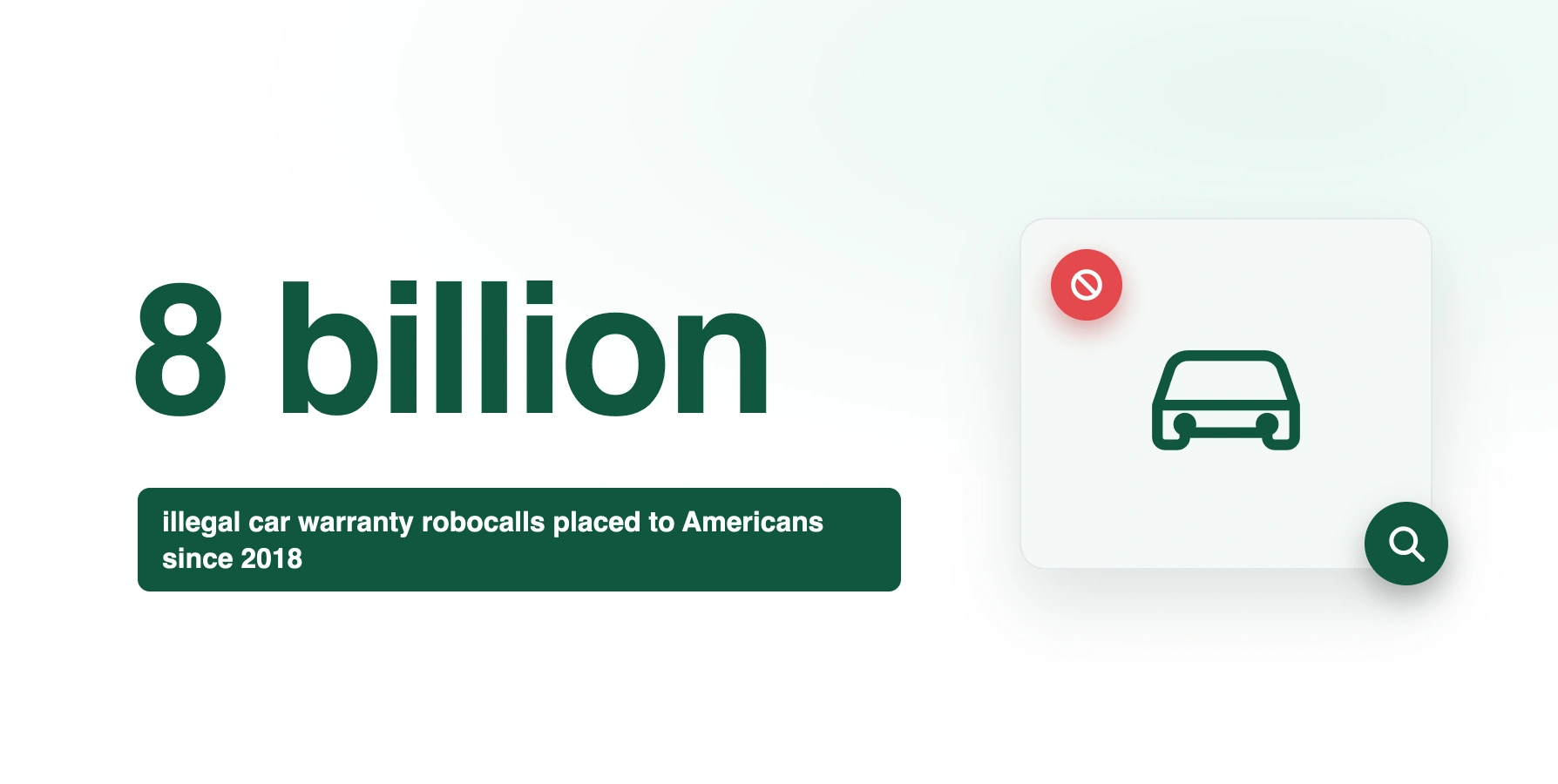
In 2022, the FCC ordered phone companies to stop carrying traffic tied to an operation believed to have placed more than 8 billion illegal car warranty robocalls to Americans since 2018, one of the largest robocall enforcement actions in the agency's history. The FCC's consumer guide on auto warranty scams has repeatedly flagged fake extended-warranty pitches as among the top sources of unwanted-call complaints the agency receives in a given year. The FTC, separately, sent more than $449,000 in refunds to consumers harmed by extended vehicle warranty scams in 2024 alone.
The volume explains why the calls feel relentless. It's not that scammers are targeting you specifically. It's that a handful of large operations have been dialing hundreds of millions of numbers a month, and enforcement, while real, hasn't shut off the spigot entirely.
Real Warranty Notice vs. Scam Call: How to Tell the Difference
Legitimate warranty communication from your manufacturer or dealership tends to look and sound different from a cold robocall. A few markers worth checking:
- Who's calling. Manufacturers and dealers typically use your name and a specific account or VIN reference, not a generic script.
- How they reach you. Real warranty notices usually arrive by mail first, referencing your specific purchase or lease. A cold call demanding immediate payment is a red flag regardless of what it claims to represent.
- What they're asking for. No legitimate warranty provider needs your full card number or a wire transfer to hold a rate that supposedly expires within minutes.
- Where the number traces. Numbers tied to car warranty scam operations are frequently reported and reused across thousands of calls, unlike a dealership's direct line.
The Four Legitimate Ways to Buy or Renew a Warranty
There are generally four channels of legitimate warranty sales.
- Buying directly through a provider's website
- Calling a provider using the number listed on its own site
- Going through a dealership
- Using a warranty marketplace that connects you with providers
In every case, you're the one initiating contact, or you've already given explicit permission to be called back. A caller who reaches out first, claiming to represent your manufacturer or your dealer without any prior relationship is suspicious.
Watch for Neighbor Spoofing
One trick that makes these calls harder to filter out by instinct alone is neighbor spoofing, which is when a scammer's system displays a number with your own area code, or one close to your own number, to make it look like a local call. It doesn't mean the caller is anywhere near you, and it doesn't mean the call is legitimate. Treat a local unknown number the same way you'd treat any other unrecognized call.
The One Question a Scammer Can't Answer
To more reliably separate real callers from scam operations, always ask for the company's name and a callback number, then say you'll call back. Hang up, look up that company's official number independently (not one the caller gave you), and compare. A legitimate provider's number will match what's listed on its own website. A scam caller either won't have a verifiable number at all, or will give you one that doesn't match anything you can find, because there's no real company behind it to look up.
What to Do When the Call Comes In
A few steps make it easier to decide whether a call is legitimate:
- Don't press any number or say "yes." Some robocalls use your response to flag the line as active, which can lead to more calls, not fewer.
- Hang up and don't call back. There's nothing to negotiate with a script.
- Check the number before you decide anything. A reverse phone lookup can help surface the number's carrier and line type, along with any scam or spam reports already tied to it, before you engage further. You should run the same check on any unfamiliar caller, including warrant scam calls or a number that shows no caller ID at all. A call claiming to represent a manufacturer that traces back to a disposable VoIP line is a strong signal on its own.
- Report it. File a complaint with the FTC or FCC. It won't stop every call, but it feeds the data regulators use for enforcement.
- Block and move on. Add the number to your phone's block list once you've confirmed it's not worth engaging with. See our full guide to stopping spam calls on iPhone and Android for carrier-level filtering options too.
If the calls keep coming from different numbers, that's consistent with how these operations rotate through large blocks of spoofed lines, not a sign you're being personally targeted. The same rotation pattern shows up across other phone-based impersonation scams, not just warranty calls.
If You Already Paid a Car Warranty Scammer
If you've already shared payment information or sent money, contact your bank or card issuer immediately to dispute the charge. Many card issuers can reverse a transaction if you report it quickly, especially if you can show the "warranty" was never delivered or was grossly misrepresented.
If you shared a Social Security number or other identifying details, treat it as a possible identity theft event. Monitor your accounts and credit report for unfamiliar activity in the following months. Report the incident to the FTC at reportfraud.ftc.gov, which also maintains state-by-state guidance on consumer protection offices that can help with disputes the card issuer won't resolve on its own.